
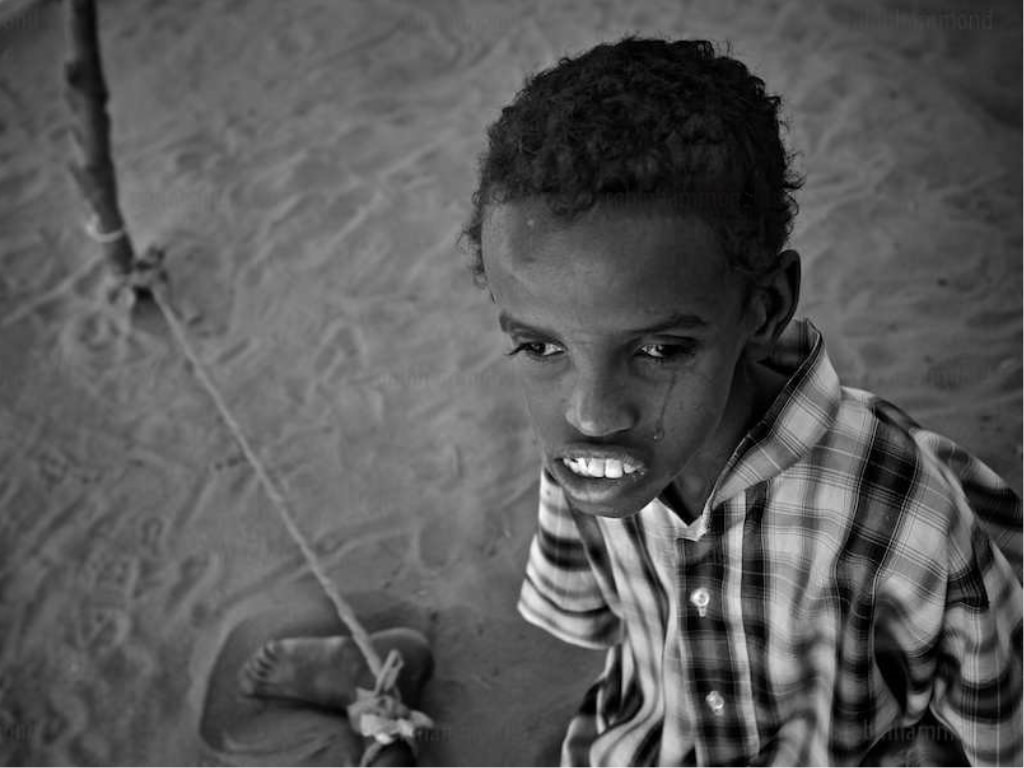
 Ahmed Adan Ahmed (pictured), 13, was tied to a stick by his mother who did not know how to deal with his mental health problems. Ahmed Adan Ahmed (pictured), 13, was tied to a stick by his mother who did not know how to deal with his mental health problems. Prolonged conflict and instability have impacted on the mental and psychological well-being of the Somali people. It is estimated that one in three Somalis has been affected by some kind of mental illness, a prevalence which is higher than in other low-income and war-torn countries. According to the Word Health Organization, as of 2017 there were only five mental health centers in the whole of Somalia, with just three psychiatrists working at those facilities. Mental health has been an underfunded and neglected sector in Somalia with lack of funds due to poor allocation of resources by the donor community as well as by the public health local authorities. The entire burden of the mentally ill is left to the family and thus to the local communities, causing a cost to the whole society in terms of development and resources. Cultural Stigma Related to Mental Illnesses Many Somalis with mental illness are socially isolated. The pain of this isolation is felt intensely because Somali culture is traditionally communal and family oriented. While a person with mental illness may be ostracized from the community, their fear of stigma may be even more powerful. Whether the ostracism is created by the community or self-imposed due to anticipated negative responses, the social isolation creates a profound worsening of the mental illness. This social isolation can be very disorienting and can make the process of healing very difficult. In fact, even without prior mental health problems, isolation from the community alone can contribute to the development of depression. The situation of the mentally ill people is worsened by the fact that Somalis believe that once a person becomes mentally ill, he/she will never recover. A Somali proverb says that a mentally challenged person can only improve but never recover (nin waashay wuu ladnaaday mooyee wuu bogsaday maleh). ISIR Consulting works to achieve specific results for our clients - results that ultimately improve people's lives.
ISIR Consulting recognizes a shared responsibility to protect and maintain our planet. We are committed to reducing our ecological footprints on the globe by engaging our communities and clients through preservation, conservation, and waste reduction practices.
Eight million tons of plastic dumped into oceans each year, killing marine life and entering the human food chain. Discarded plastic is one of the biggest environmental threats facing the planet, the UN said in a report on Tuesday to mark World Environment Day. The UN report, Single-Use Plastics: A Roadmap for Sustainability, said rules limiting the use of plastic bags have helped in places such as Morocco, Rwanda and parts of China - sometimes significantly. "Our world is swamped by harmful plastic waste," UN Secretary-General Antonio Guterres said in a speech. "Micro-plastics in the seas now outnumber stars in our galaxy. "If present trends continue, by 2050 our oceans will have more plastic than fish." Globally, eight million tons of plastic is dumped into the ocean every year, killing marine life and entering the human food chain, according to the UN Environment Program. 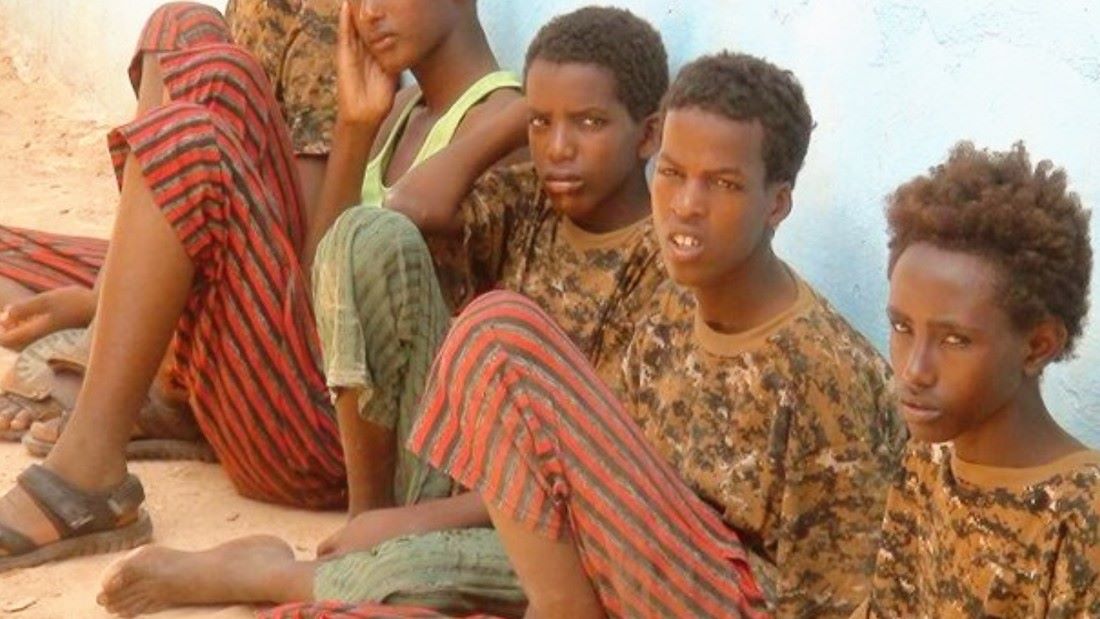 The use of children in hostilities is not a new phenomenon. Nearly 20 years ago, the report of the expert of the Secretary-General on the impact of armed conflict on children, known as the Machel Report brought to international attention the extent and consequences of recruitment and use of children by armed forces and armed groups. Even today, the recruitment of children largely takes place in situations of conflict, though terrorist and violent extremist groups are by no means the only ones perpetrating such grave violations against children.
The involvement of terrorist and violent extremist groups entails numerous new challenges for States. First, prevention has become particularly complex, as evidenced by the innovative methods of propaganda and recruitment employed specifically by such groups. This is a primary concern to efforts to effectively tackle a security threat while, at the same time, limiting the victimization of such children. Secondly, because of their association with terrorism-related activities, which are classified in international and national law as serious offences, an increasing number of children come into contact with national authorities, in particular with justice authorities. In this context, the questions range from the applicable international legal framework to the legal status of the children and the competent authorities and procedures to deal with them. Such children are commonly regarded as a security risk and subsequently exposed to further violations of their rights. Courtesy of UNODC Download full report: http://bit.ly/2FjmVj5 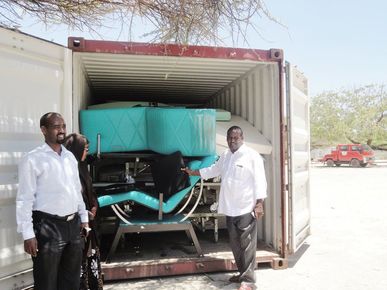 Medina referral hospital, Mogadishu Medina referral hospital, Mogadishu Somalia’s poor national health was exacerbated by state collapse; health security has long eluded the vast majority of Somalis. Many parts of the country’s health system collapsed or never existed before to state dissolution in 1991. Public health and the standard of healthcare services in Somalia are among the worst in Sub-Saharan Africa.
In a country where around three-quarters of the population lives under US$2 per day, financial hardship is one of the key reasons why Somalis do not access or seek health services. Somalia also falls far below the minimum global expectation of the doctor/patient ratio. Currently, there are only four doctors, nurses or midwives for every 10 000 people in Somalia. In addition, one out of every 12 women dies due to causes related to pregnancy, and 1 out of every 7 Somali children dies under the age of 5. A total of three 20ft containers filled with medical supplies and equipment was distributed to several community clinics in Mogadishu by the World Mobilization Somalia and Action Medeor in partnership with ISIR Consulting and SOFORD, a non-governmental organization in Mogadishu. Medina hospital is one of the two largest referral hospitals in the city that treats several hundred war-wounded patients and expectant mothers every month and is focused more on trauma and emergency services. To ensure the safety of patients, renowned physicians provided free health exams to patients in an exam site set up at the hospital. Our support for Somalia’s health system will continue. Partnership agreements with local authorities and non-governmental organizations are the primary way health services are supported in Somalia. 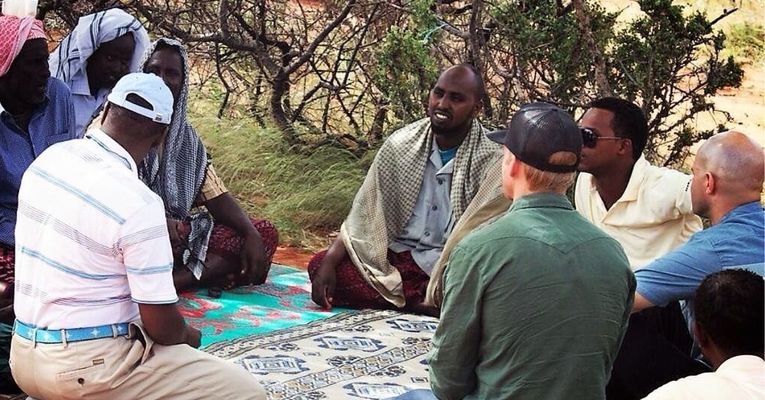 Impact of the civil war on traditional governance institutions since 1991, traditional elders played a critically important role in mediating and regulating the interactions within and between local communities. While this was also the case under the government, their role extended significantly to fill the vacuum of authority created by the collapse of the state and the ensuing civil war and lawlessness. However the conflict dynamics in south-central Somalia also created powerful clan-based faction leaders who undermined the authority of the traditional clan leaders.
The top-down approach employed in internationally-sponsored peace processes reinforced this through their focus on armed faction leaders as primary interlocutors and “representatives” of their clan constituencies. Reconciliations relating to power-sharing emerged during and after the civil war period, focusing on formation or control of the local or regional administrations and strategic resources. The high stakes and number of players involved mean these initiatives present significant challenges to mediation. ISIR Consulting intends to be catalytic, which means that we are trying out risky approaches towards peacebuilding in central Somalia. 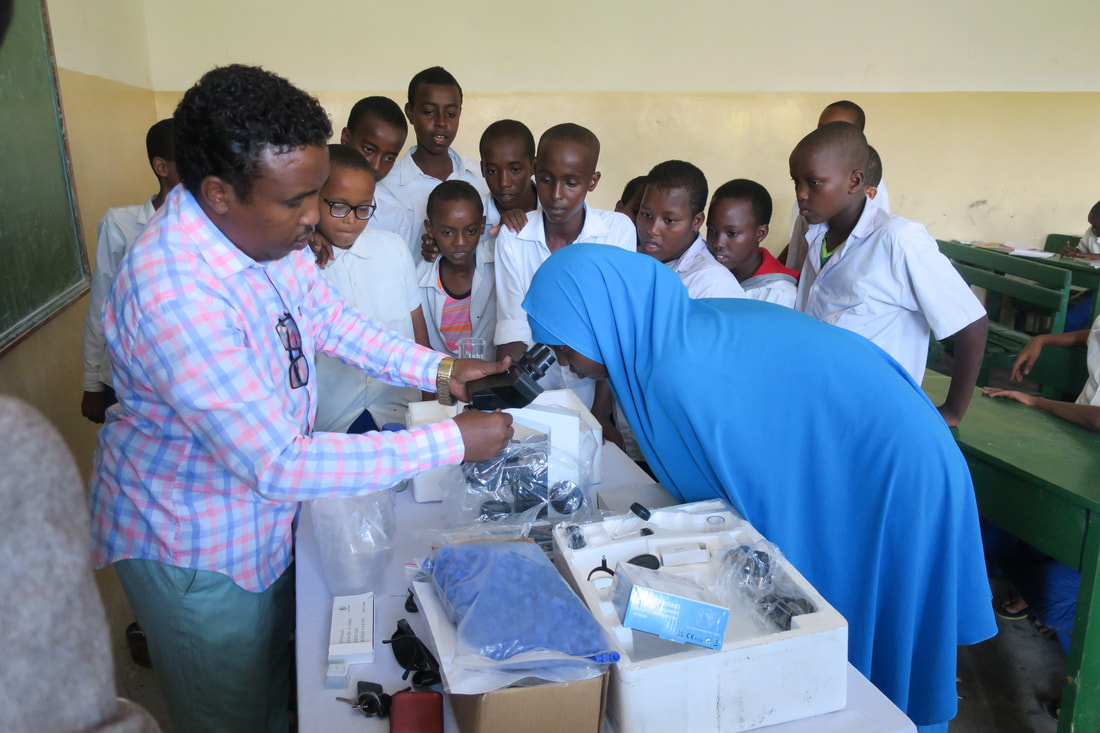 After more than two decades of conflict, one generation of Somalia’s children lost the opportunity for formal education and other benefits of a stable childhood. Somalia has one of the world’s lowest enrollment rates for primary school-aged children – only 30 percent of children are in school and only 40 percent of these are girls. Further, only 18 percent of children in rural households are in school.
Extremely high rates of poverty in communities across Somalia make it difficult for parents to afford school fees. In many areas, parents are required to pay for their children’s education, and poverty remains the main reason they give for not sending their children to school. ISIR Consulting realizes that the future belongs to the nation that best educates its people. We support a project that equips schools in Somalia with science lab equipment and supplies to improve the education quality and student achievement. At ISIR Consulting, we understand the importance of having up-to-date science lab equipment supplies at schools as science is different from any other subject and to understand its concepts, one has to look beyond the books and conventional classroom teaching. ISIR Consulting provides cutting edge research solutions and in-depth analysis to our clients on diverse issues spanning the political, socio-economic and structural contexts in Somalia and the Horn of Africa Region.  With strong operational experience, robust program management skills, rapid response capabilities, and a network of local expertise, ISIR Consulting helps humanitarian objectives in Somalia. At Isir Consulting, innovation has been at the heart of our architecture practice from the start. With each structure, we build on a legacy of sophisticated spaces that have helped clients to foster collaboration, inspire new thinking, and drive success. Our goal is to create lasting structures that support clients today and tomorrow by combining advanced architectural approaches and close teamwork focused on results. With architects, engineers, and clients working side by side, we create meaningful structures that transform businesses.  ISIR Consulting is carrying out conflict-sensitive initiatives assessment designed to address acute water fragility and other drivers of conflict in central Somalia.
The assessment will focus on the complexities of nomadic pastoralist systems and the specific needs of pastoral communities. Among other priorities, to address and support appropriate reforms of regulations and land tenure rights relating to access to pasture land and water for communities, especially nomadic pastoralists and to support the development of systems that ensure emergency access for pastoralists to water and pasture (or fodder) during droughts. |
ISIR ConsultingWe offer a wide range of services to clients in helping tackle, and address transition and development dilemmas, turning challenges into opportunities and engaging local communities to develop homegrown solutions to threats and challenges. Archives
December 2021
Categories |

 RSS Feed
Isir Consulting | All Rights Reserved | Designed by DreamBuilders Website Design